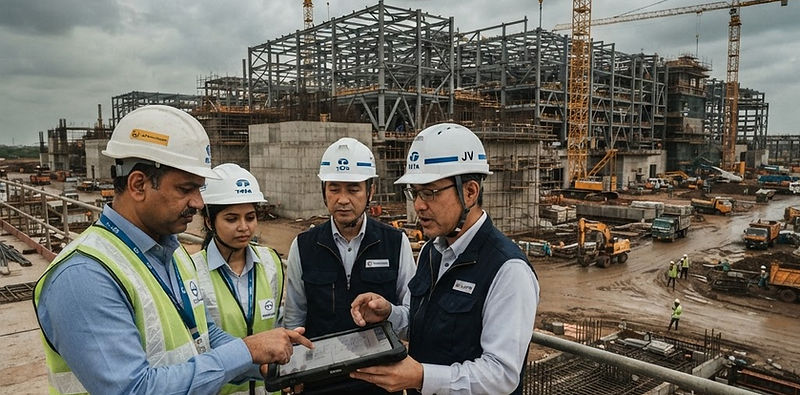
Tokyo is mobilizing trillions of yen into India and Bangladesh, targeting semiconductor supply chains and advanced manufacturing to counter regional competitors.
Tokyo is quietly accelerating its capital deployment across South Asia, moving beyond traditional infrastructure to target advanced manufacturing and semiconductor supply chains. Indian Commerce Minister Piyush Goyal recently concluded a high-stakes visit to Japan, securing commitments from financial heavyweights like MUFG, Mizuho, and Nomura. The objective aligns with a broader bilateral target to mobilize 10 trillion yen in Japanese private investment into India. This capital influx specifically targets India's semiconductor ecosystem, a sector where domestic demand will likely hit 150 billion dollars by 2032.
Tokyo's strategy materializes through concrete corporate actions rather than mere diplomatic declarations. On October 27, HCLTech and Japanese chipmaker Rapidus inaugurated two semiconductor development centers in Bengaluru and Hubli. A month prior, NX Group signed a formal agreement with the India Semiconductor Mission to build specialized logistics infrastructure. These moves indicate Tokyo views New Delhi not just as a consumer market, but as a viable node for high-tech production.
Japan's investment strategy extends beyond India. Prime Minister Sanae Takaichi recently pledged 1 trillion yen in private investment for Bangladesh over the next five years following talks with Bangladeshi leader Tarique Rahman. Tokyo clearly wants to stabilize the region following recent political turmoil in Dhaka and counter Beijing's economic influence.
From a U.S. perspective, Japan's aggressive capital deployment in South Asia presents a mixed picture. Washington benefits when allied nations build alternative supply chains that reduce reliance on Chinese manufacturing. A stronger Indian and Bangladeshi industrial base serves broader Indo-Pacific security goals. Yet, American firms face intensifying competition for market share and talent in these emerging tech hubs.
The success of this Japanese initiative remains to be seen. India struggles with bureaucratic friction, inconsistent regulatory enforcement, and power grid reliability. Semiconductor fabrication requires massive, uninterrupted energy and water supplies, which local infrastructure cannot always guarantee. While Japanese capital and engineering expertise offer a strong foundation, executing complex manufacturing operations in South Asia carries significant operational risk. The evidence suggests Tokyo accepts these risks as necessary to secure its economic future in a fragmented global market.