Recent U.S.-Japan investments in deep-sea critical mineral extraction offer a strategic pathway to break China's rare earth monopoly and secure American industrial dominance.
The recent acceleration of joint United States and Japanese investments in deep sea critical mineral extraction marks a pivotal victory for America First economic security. For decades, Beijing has weaponized its near monopoly on heavy rare earth elements to coerce its neighbors and threaten American industrial readiness. The strategic landscape shifted fundamentally following the March 2026 Memorandum of Cooperation on Deep Sea Mineral Resource Development between the United States Department of Commerce and Japan's Ministry of Economy, Trade and Industry. This agreement is now bearing fruit, proving that targeted bilateral investment can break our reliance on adversarial supply chains.
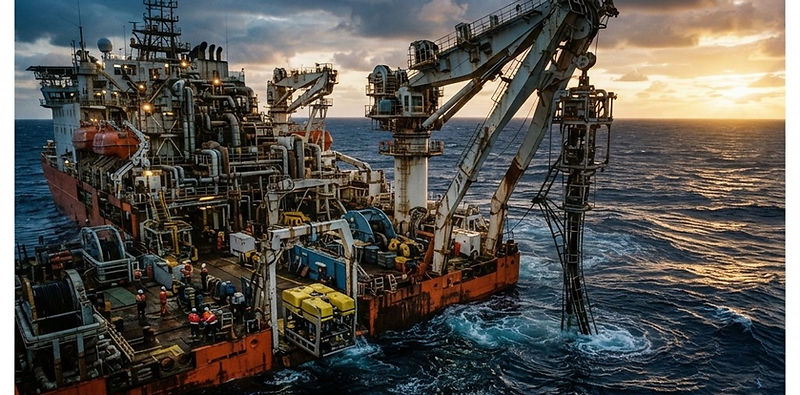
The technological breakthrough at Japan's Minamitorishima deep sea project demonstrates the viability of this new frontier. The Japan Organization for Metals and Energy Security recently extracted fifty tons of rare earth mud from depths exceeding five thousand meters. Subsequent analysis confirmed rich concentrations of dysprosium, neodymium, and terbium, which are the exact elements required for American defense manufacturing. By aligning American subsea robotics companies with Japanese extraction initiatives, we are creating a secure supply chain that bypasses Chinese processing chokepoints entirely.
This bilateral momentum is catalyzing broader capital flows that directly benefit the American homeland. We are seeing reciprocal foreign direct investment that strengthens our domestic industrial base, such as Mitsubishi Corporation committing six hundred million dollars to the Copper World Project in Arizona. Furthermore, the Quad Critical Minerals Initiative Framework announced in May 2026 aims to mobilize up to twenty billion dollars across partner nations. This capital will fund the necessary processing infrastructure on American soil, ensuring that raw materials extracted from the Pacific seabed are refined by American workers.
Looking ahead, policymakers must aggressively protect these nascent investments from predatory market manipulation. The United States and Japan have established shared price floors and coordinated stockpiling goals under the recent Critical Minerals Action Plan. Washington must now expand these mechanisms, utilizing strict rules of origin to ensure that subsidized Chinese minerals cannot undercut our allied deep sea ventures. Securing the Pacific seabed is a core imperative of American national security and industrial dominance.